- EN
- ES
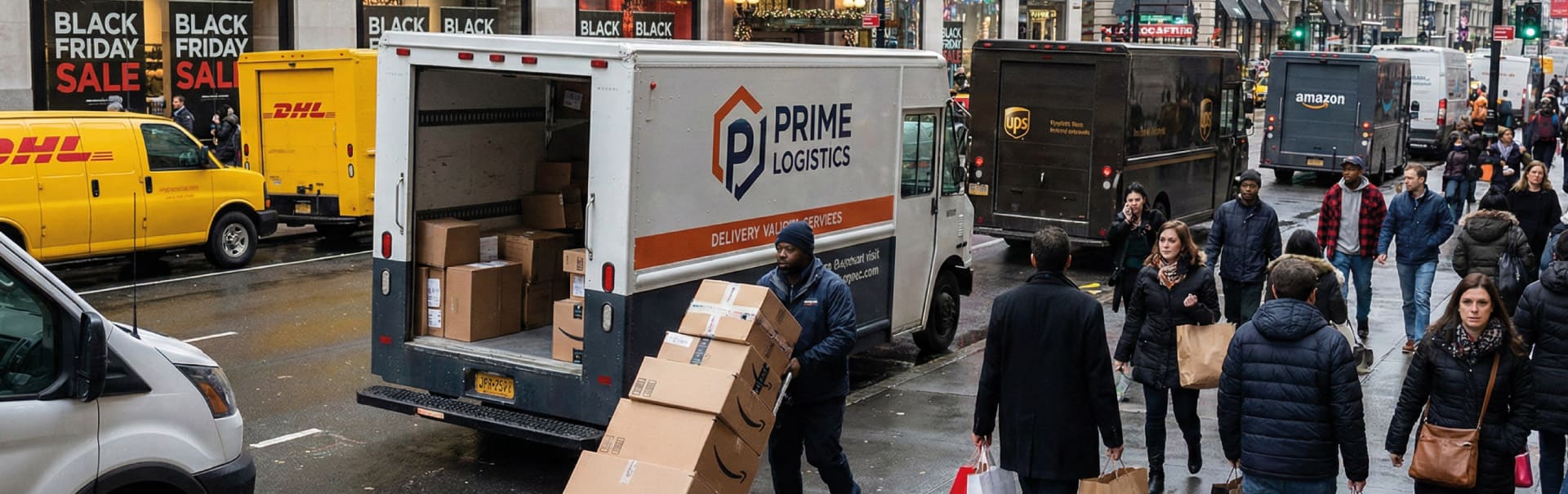

Zaragoza, the logistics hub for Black Friday
By Carolina Ciprés, Director of Research
Black Friday has become the greatest logistical challenge of the year in Spain. The campaign, which extends until Christmas, is no longer a temporary spike: it has turned into a full season, marked by early purchasing and the demand for a fast, flexible service. In this context, Zaragoza is consolidating its position as a strategic hub, capable of absorbing operational pressure thanks to its infrastructure, connectivity, and commitment to innovation.
According to data from the Spanish logistics association UNO, online shipments have grown by 240% in just five years. For this campaign, 125 million shipments are expected, with daily peaks of up to 5.5 million parcels, requiring meticulous planning and unprecedented technological capacity.
The key to Zaragoza’s leadership during Black Friday lies in PLAZA, the largest logistics platform in Europe, with more than 13 million m² and a unique multimodal connectivity by road, rail, and cargo airport. Companies such as Amazon, Inditex, DHL, Dachser, GLS, Decathlon, Grupo Sesé, and Carreras have chosen Zaragoza for their operations and, ahead of Black Friday, reinforce their workforce and leverage the potential of automation to manage large volumes of orders in record time.
Black Friday confirms that technology is crucial in logistics. Companies rely on artificial intelligence and data analytics throughout the entire supply chain, from demand forecasting to route planning and delivery to both retail and households. Last-mile delivery in particular presents an additional challenge, as it must reconcile urban livability (less pollution, congestion, and noise), consumer expectations, and the sector’s pursuit of efficiency and profitability.
Zaragoza not only leads at scale, it also innovates in last-mile logistics. The city is participating in the European DISCO project, which has installed a microhub at the San Vicente de Paúl Market. This space is based on the DISCOPROXI solution, which leverages existing urban spaces and converts them into small logistics centers or microhubs. From there, deliveries are consolidated and distributed using light electric vehicles, integrating real-time data to reduce emissions and optimize routes. The ultimate goal of DISCO is to scale this network of microhubs in line with the principles of the Physical Internet.
Black Friday is the mirror in which the transformation of logistics is reflected. Zaragoza shows that the key to meeting this challenge lies not only in scale, but in intelligent adaptation, combining global macrohubs with sustainable urban solutions such as the DISCO project microhub. This ability to integrate technology, talent, and sustainability makes the city a European benchmark.
According to Randstad, the Black Friday campaign will lead to the hiring of nearly 3,000 workers in Aragón. But employment is also evolving: alongside delivery men and warehouse operators, demand is growing for professionals in AI and automation, reflecting the convergence of technology and people, in line with Industry 5.0. This 5.0 evolution adds a social dimension, assigning technology the role of enhancing human capabilities rather than replacing them.
In this regard, Zaragoza is also positioned as a logistics talent hub, thanks to institutions such as Zaragoza Logistics Center (ZLC), an internationalcenter in supply chain education and research affiliated with the Massachusetts Institute of Technology and the University of Zaragoza. ZLC offers master’s programs that connect academia with industry, preparing professionals capable of leading the sector’s digital and sustainable transformation. In addition, ZLC’s research activities enable academic curricula to be regularly updated, creating a virtuous circle that supplies Aragón with logistics professionals.
These young professionals will be the leaders who will have to tackle the Black Friday challenges of the future. Current trends indicate that we are moving toward a hyper-connected and decarbonized logistics system, shaped by the use of autonomous vehicles and drones for ultra-fast deliveries, smart urban hubs integrated into open data spaces, a circular economy applied to returns management, and digital twins for predictive and prescriptive simulation.
Today, Black Friday puts every link in the logistics chain to the test, and Zaragoza responds with a unique combination of infrastructure, technology, and talent. But the most important thing is that this response is not limited to the present: Zaragoza is today the laboratory where tomorrow’s logistics are being tested. The city is positioning itself to lead the transition toward more agile, collaborative, and decarbonized models in which artificial intelligence, smart urban hubs, and the circular economy will take center stage.
In short, Zaragoza not only successfully faces Black Friday: it turns it into an opportunity to anticipate the logistics of the future.
This article was originally published in Spanish by El Periódico de Aragón: https://www.elperiodicodearagon.com/zaragoza/2025/11/23/fondo-zaragoza-epicentro-logistico-black-124014324.html

